

Before You Plan Another Year, Understand the One You’re Leaving
Year-End Reflection: Clarity Before Planning. The most useful thing you can do before setting new goals may be to understand what the past year has already shown you. As another year approaches its end, it’s natural to start thinking about what comes next.
New goals. Better habits. Different routines. Financial improvements. Healthier choices. Perhaps even an entirely different direction for your life. But before you begin making those plans, there’s something worth considering: Have you taken the time to understand the year you’re leaving behind?
A meaningful year-end reflection is more than remembering what happened over the past twelve months. It’s an opportunity to recognize what worked, what didn’t, what changed, and what those experiences may be telling you about the life you’re trying to build.
Without that understanding, it’s easy to enter another year carrying the same expectations, repeating familiar patterns, and pursuing goals that may no longer reflect what you need.
The calendar may be changing. That doesn’t necessarily mean your approach has to remain the same.
Why Year-End Reflection Matters Before Setting New Goals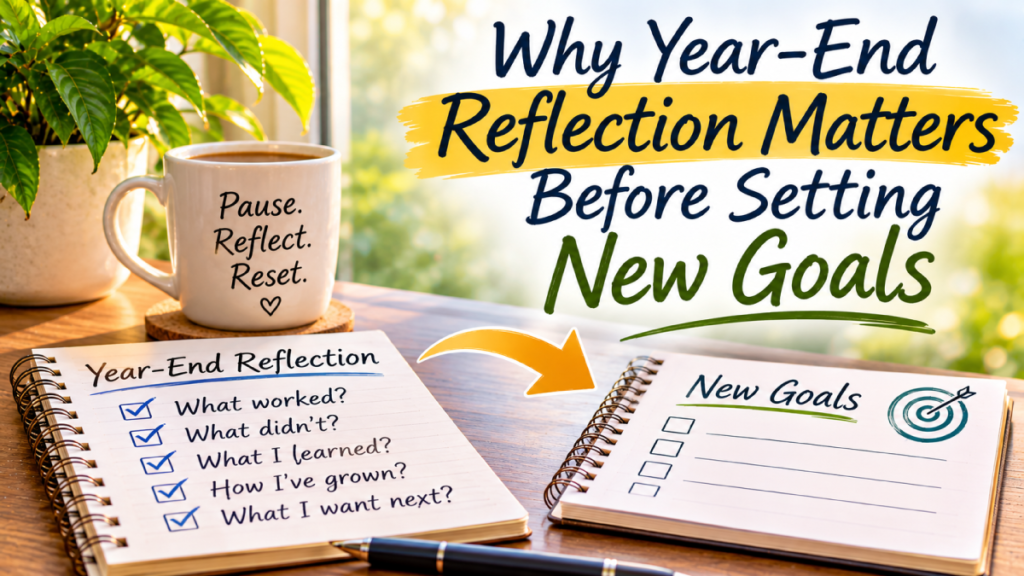
There’s something appealing about a fresh start. A new year offers a clear beginning, a chance to imagine different possibilities, and an opportunity to approach life with renewed intention. But sometimes, our enthusiasm for starting over causes us to overlook what we’ve already experienced. We focus on where we want to go without examining where we’ve been.
Perhaps you planned to become more financially stable, but unexpected expenses changed your priorities. Maybe you intended to improve your health, only to discover that your daily schedule left little room for rest. You might have pursued a professional opportunity that looked promising but ultimately wasn’t right for you.
Those experiences contain information. A thoughtful year-end reflection helps you separate what you hoped would happen from what actually happened. More importantly, it helps you consider why.
That distinction matters because setting another goal isn’t always the solution. Sometimes, the more useful decision is to change the conditions surrounding the goal.
For example, if you struggled to maintain an exercise routine, the answer may not be greater discipline. It might be choosing a routine that fits your actual schedule, energy, and responsibilities.
Understanding the circumstances gives you a better starting point than simply promising to try harder.
Your Year Was More Than What You Accomplished
When people review their year, accomplishments often become the primary measure of success. Did you reach your savings goal? Lose the weight? Finish the project? Start the business? Make the career change? These are reasonable things to consider. But they don’t tell the entire story.
A year can include meaningful progress that never appears on a checklist. Perhaps you became more comfortable setting boundaries. You learned that a particular commitment was draining more energy than it deserved. You became more aware of your spending habits, recognized a pattern in your relationships, or finally acknowledged that something in your life needed to change.
None of those realizations necessarily produces an immediate, visible result. Yet they can influence the decisions you make for years to come. This is one reason a year-end reflection should include more than completed goals. It should also account for what you learned about yourself and your circumstances. Consider the difference between these two statements:
I didn’t accomplish everything I planned.
And:
I didn’t accomplish everything I planned, but I understand more about what prevented me from doing so.
The first statement describes an outcome. The second offers information you can use.
That doesn’t mean every disappointment needs to be transformed into a positive lesson. Some experiences are simply difficult, unfair, or disappointing. But even when a situation didn’t turn out as expected, understanding what happened can help you decide what deserves your attention next.
Year-End Reflection Without Turning It Into Self-Criticism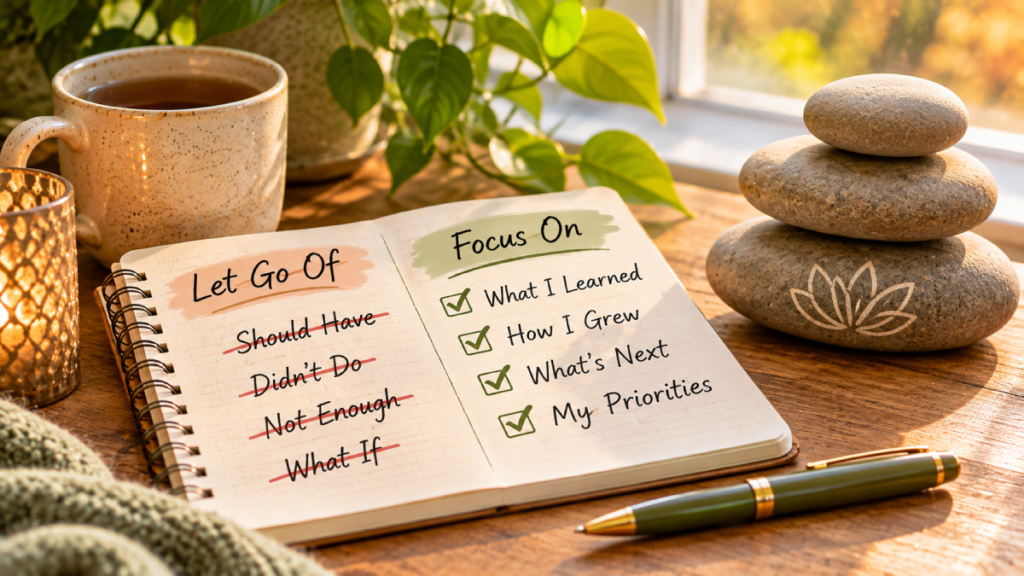
Reflection can be useful. It can also become another opportunity to judge ourselves. You may look back and wonder why you didn’t accomplish more, why certain decisions took so long, or why your continued habits you had intended to change didn’t happen.
It’s easy to evaluate past choices using information you only have now. But the person making those decisions earlier in the year didn’t necessarily have the same knowledge, resources, or circumstances you have today. That context matters.
The Greater Good Science Center’s discussion of self-compassion explores how responding to setbacks with understanding rather than harsh criticism can support motivation and personal growth. A useful year-end reflection doesn’t require you to excuse every decision or avoid accountability. It simply asks you to examine your experiences without making personal judgment the center of the process.
Instead of asking:
Why couldn’t I get anything right?
Try asking:
What was happening at the time, and what might I approach differently now?
Instead of:
Why am I still dealing with the same problem?
Consider:
What has made this problem difficult to resolve, and what kind of support or change might help?
These questions don’t eliminate responsibility. They make responsibility more constructive.
This also connects with a theme explored in Fullrliving’s article The Hidden Cost of Self-Improvement: when every experience becomes another opportunity to measure ourselves against an ideal, personal growth can begin to feel like a constant obligation.
Your year doesn’t need to become another performance review. It deserves a more complete examination.
Look at What Worked Before Focusing on What Didn’t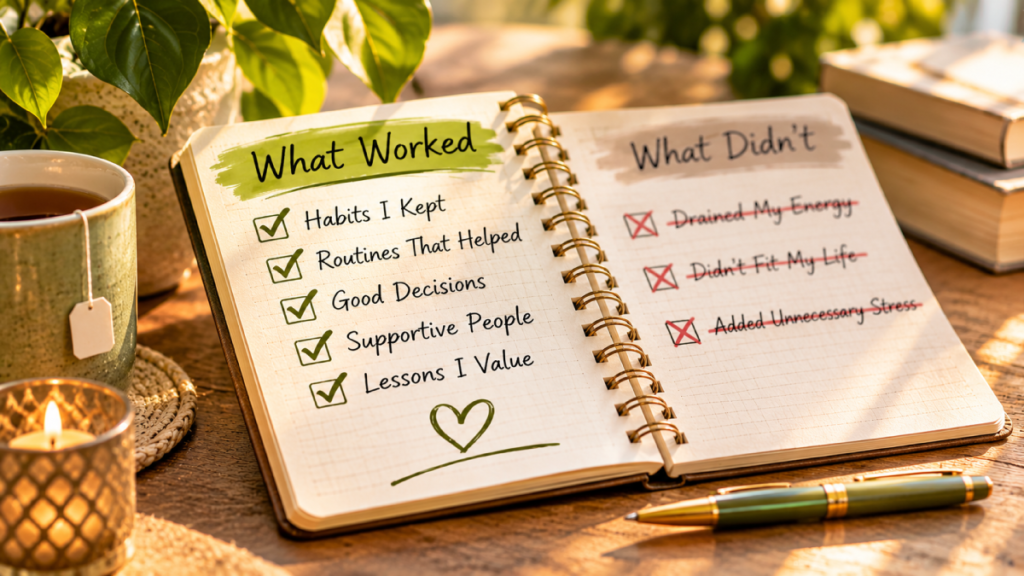
One of the easiest mistakes to make during a year-end reflection is concentrating almost entirely on problems. The unfinished project receives more attention than the routine that worked. The unexpected expense overshadows the money you managed responsibly. The difficult relationship becomes more memorable than the connections that supported you.
But understanding your year also means recognizing what deserves to continue. Think about the habits, choices, relationships, and systems that made everyday life more manageable.
Maybe preparing meals ahead of time reduced stress during the week. Perhaps keeping a simple calendar helped you feel more organized. You may have discovered that spending less time on social media improved your concentration, or that regular conversations with a friend gave you a sense of connection.
These things might seem ordinary. But ordinary improvements are often the ones that have the greatest influence on daily life.
Ask yourself:
- What made my life easier this year?
- Which decisions brought a sense of stability or relief?
- What habits supported my energy, finances, relationships, or well-being?
- What did I begin doing that I’d like to continue?
- When did I feel most aligned with how I want to live?
The purpose isn’t to create a list of achievements. It’s to identify what was genuinely useful. Sometimes, moving forward requires doing more of what already works rather than constantly searching for something new.
What Drained Your Energy, Time and Attention?
Not every lesson comes from a major event. Some become visible through repeated everyday experiences.
The commitment you consistently dreaded. The routine that required more effort than it returned. The subscription you rarely used. The responsibility you accepted without considering whether you had the capacity to maintain it. Individually, these may seem insignificant. Together, they can influence how you experience your days.
An honest year-end reflection should include the things that made life unnecessarily difficult. This isn’t about identifying everything you need to eliminate. It’s about recognizing where your resources were going and whether those demands still make sense.
In The Exhaustion You Can’t Fix With Sleep, we explore how the accumulation of everyday demands can contribute to feeling depleted, even when physical rest is part of your routine. That same perspective can be useful when reviewing your year.
Consider whether your time, attention, and energy were consistently directed toward what mattered most—or simply toward whatever demanded an immediate response.
You might discover that certain obligations need clearer boundaries. Some systems may need simplifying. Other commitments may have served a purpose earlier in the year but no longer fit your circumstances.
The question isn’t whether every demanding experience was a mistake. It’s whether you want to continue making room for it.
What Changed About You This Year?
We often begin a year with a particular understanding of who we are and what we want. Twelve months later, that understanding may have changed. Your priorities may be different. Something you once considered important may no longer carry the same meaning. A goal that seemed essential in January might feel less relevant now.
Occasionally these changes happen gradually.
You might become less interested in pursuing recognition and more interested in having control over your time. You may begin valuing financial stability over acquiring more things. Perhaps you discover that the lifestyle you were working toward isn’t the one you actually want. These shifts deserve attention.
During your year-end reflection, ask whether your original goals still reflect your current values. A goal doesn’t have to remain important simply because you once committed to it. Changing your mind isn’t automatically a sign of inconsistency. At times it’s the result of having a clearer understanding of your needs.
Of course, it’s worth distinguishing between a goal you’ve genuinely outgrown and one you’ve abandoned because it became difficult.
Both situations are possible. The purpose of reflection is to recognize the difference.
The Difference Between Starting Over and Moving Forward
There’s a familiar message that appears every December: leave the old year behind and become a new version of yourself. It can sound encouraging. But it can also create the impression that meaningful change requires a complete reinvention. New routines. New priorities. New habits. A new identity. All beginning January 1.
In reality, you may not need to start over. You may need to continue something that has already begun, adjust something that isn’t working, or stop investing effort in something that no longer serves you.
The American Psychological Association’s guidance on New Year’s resolutions emphasizes starting with realistic, manageable changes rather than attempting an overwhelming transformation all at once. This is where year-end reflection becomes especially valuable. Instead of treating the new year as an opportunity to replace your entire life, you can use what you’ve learned to make more deliberate choices.
- You may decide to keep a routine but adjust its timing.
- Continue working toward a financial goal while changing your approach.
- Maintain a relationship while establishing healthier boundaries.
- Or pursue a different direction because your priorities have genuinely changed.
These decisions may not feel as dramatic as starting over. But they may be more sustainable.
Five Questions to Guide Your Year-End Reflection
You don’t need an elaborate process to begin understanding your year. A quiet moment, a notebook, and a willingness to look beyond accomplishments can be enough. Start with these five questions.
1. What actually happened this year?
Think beyond major milestones. Consider changes in your circumstances, unexpected challenges, meaningful experiences, and decisions that influenced your daily life. Try to describe the year as it was, rather than only as you hoped it would be.
2. What worked better than I expected?
Identify routines, choices, relationships, and systems that supported you. Pay attention to small improvements that may have gone unnoticed because they became part of everyday life.
3. What repeatedly made life more difficult?
Consider the situations, habits, commitments, or expectations that consistently required more than they returned. Ask whether those difficulties were temporary or whether something needs to change.
4. What did I learn about what matters to me?
Think about how your priorities may have shifted. What feels more important today than it did at the beginning of the year? What matters less?
5. What do I want to carry forward, change, or leave behind?
Use your answers to identify a few meaningful decisions. You don’t need to solve everything immediately. Start by recognizing what deserves continued attention and what may no longer belong in your plans.
These questions aren’t intended to produce perfect answers. They’re meant to help you see your experiences more clearly.
Turn Your Year-End Reflection Into a More Intentional Reset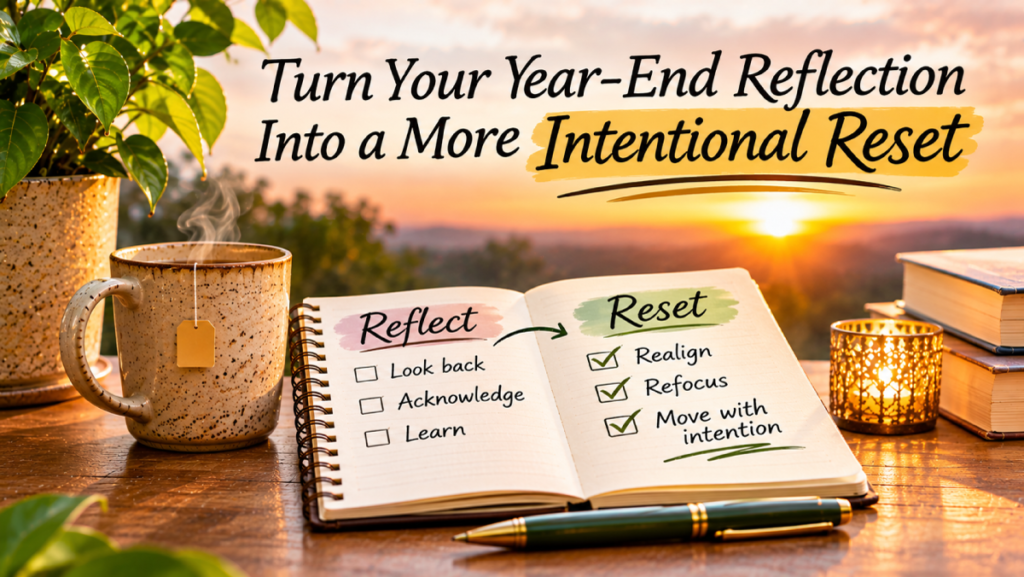
Understanding your year is valuable. But reflection becomes especially useful when it informs what you choose to do next. That doesn’t mean you need to immediately create a detailed plan for every area of your life. Begin with what your answers reveal.
Perhaps you need a more realistic approach to managing your finances. Maybe your routines require more flexibility. You might recognize the importance of protecting your energy, simplifying your commitments, or making more room for something you’ve consistently postponed.
Rather than creating an extensive list of resolutions, identify two or three areas where a thoughtful adjustment could make a meaningful difference. You can also explore Fullrliving’s Year-End Reset workbook, designed to provide a structured space for reviewing the year, examining your priorities, and preparing for what comes next.
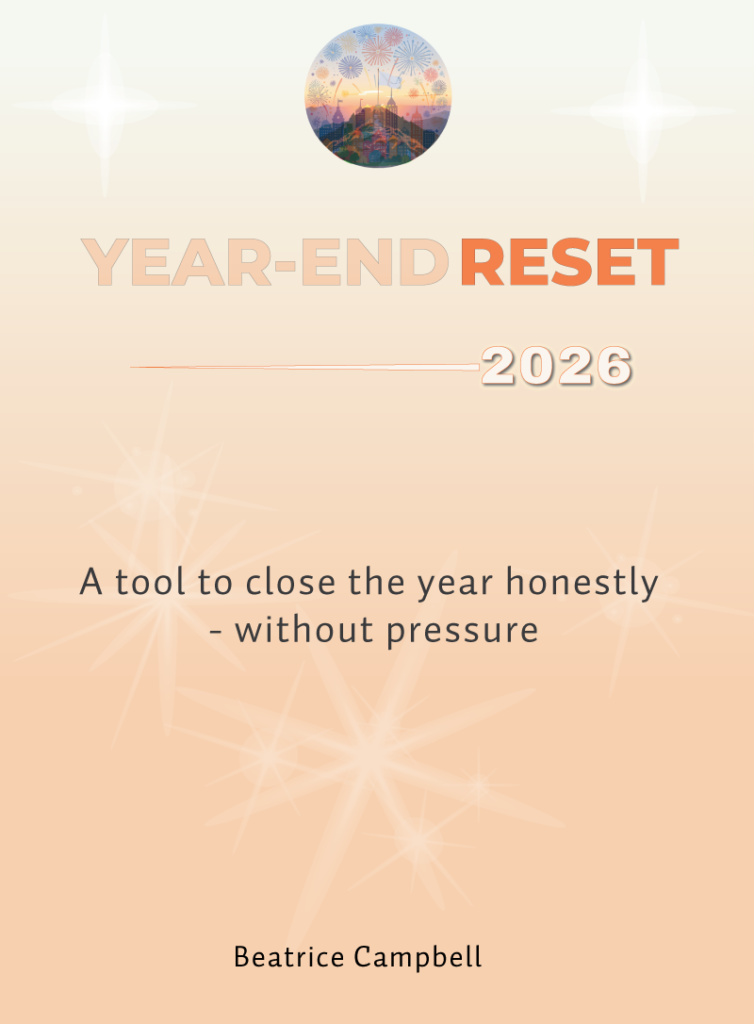 Explore the Year-End Reset
The intention isn’t to rush you into another round of goals. It’s to give your next decisions a clearer found
Final Thought You Don’t Have To Have Everthing Figured Out
A year doesn’t always end with a satisfying conclusion. Some challenges remain unresolved. Certain goals are still unfinished. You may enter another year with questions you hoped would already have answers. That’s part of the reality of living.
You can acknowledge what was difficult without allowing it to define the entire year. You can appreciate what went well without pretending everything was easy. And you can recognize that some of your most important progress may have happened in ways you didn’t originally expect.
A meaningful year-end reflection isn’t about proving that the past twelve months were successful. It’s about understanding what they revealed. Before you decide what the next year should look like, give yourself an opportunity to understand the one you’re leaving. You may discover that you don’t need an entirely new beginning. You need a clearer way forward.
Fullrliving — Live Better. Not Busier.