



The Exhaustion You Can’t Fix With Sleep
Why feeling drained isn’t always about how much rest you’re getting.
You went to bed at a reasonable hour. You slept through most of the night. Perhaps you even managed to get the recommended seven or eight hours. Yet somehow, you’re still exhausted.
By the time morning arrives, your mind is already occupied with everything that needs to get done. As the day progresses, your energy dips, your patience wears thin, and even small decisions begin to feel unusually difficult.
Naturally, you assume you need more sleep. Perhaps a better bedtime routine or another weekend to catch up. But what if sleep isn’t the only thing you’re missing?
Sometimes exhaustion has less to do with how many hours you’ve spent in bed and more to do with how much you’re carrying while you’re awake.
Not All Exhaustion Is the Same
We often use the word tired to describe several different experiences. However, understanding the distinction can help us recognize what we actually need.
Physical fatigue may follow strenuous activity, illness, or prolonged exertion. Sleepiness, on the other hand, is the sensation that you could close your eyes and drift off. Mental and emotional exhaustion can feel different.
Instead of wanting to sleep, you may find yourself struggling to concentrate, becoming easily frustrated, or feeling overwhelmed by responsibilities that once seemed manageable. Although these experiences can overlap, they aren’t identical.
Mental exhaustion may develop when your attention is constantly occupied by decisions, responsibilities, interruptions, or unresolved concerns. Similarly, emotional exhaustion can accompany ongoing stress, difficult relationships, uncertainty, or demands that leave little opportunity for recovery.
Consequently, you might spend an entire day sitting at a desk and still feel completely depleted by evening.
You may even finish a quiet weekend feeling as though you never had a break. That’s because physical inactivity and genuine recovery aren’t necessarily the same thing.
The Invisible Work That Follows You Everywhere
Consider everything you manage that never appears on a traditional to-do list.
Remembering appointments. Keeping track of household needs. Anticipating problems. Thinking about finances. Responding to messages. Making decisions for other people.
Then there’s the ongoing question of whether you’re doing enough.
Much of this work happens quietly, in the background of everyday life. Because it isn’t always visible, it’s easy to underestimate how much attention it requires. For example, think about an ordinary morning.
Before you’ve even finished breakfast, you may have checked your email, reviewed your calendar, read several notifications, thought about an upcoming bill, and mentally rearranged your afternoon. Individually, none of these activities seems particularly demanding.
Together, however, they create a steady stream of demands on your attention.
As this pattern continues throughout the day, you may reach the evening feeling mentally spent, even when your most important tasks remain unfinished.
The challenge isn’t necessarily that you’re doing too much in a measurable sense. Rather, your mind may rarely have an opportunity to stop responding.
Over time, this constant state of mental engagement can make it harder to recognize when you need a genuine break.
In fact, the connection between prolonged stress and well-being is worth understanding. Our earlier Fullrliving article, Stress Matters, How to Deal with It, explores how stress affects everyday life and offers practical ways to manage it.
When Every Small Decision Feels Like Another Task
- What should you make for dinner?
- Which email deserves a response first?
- Should you exercise today or tomorrow?
- Is there enough time to run that errand?
- Would it be better to finish the project tonight or start fresh in the morning?
Individually, these are ordinary decisions. Nevertheless, when you’re already overwhelmed, each one can feel like another demand.
The phrase decision fatigue describes the experience of finding choices increasingly difficult after prolonged mental effort. However, researchers continue to debate the mechanisms behind this phenomenon and how consistently it occurs.
Regardless of the terminology, uncertainty, competing priorities, and frequent interruptions can make everyday decisions feel more demanding. Fortunately, reducing that burden doesn’t always require a major lifestyle change.
For instance, planning a few familiar meals can eliminate the nightly question of what to cook. Likewise, establishing a simple morning routine may reduce the number of choices you face before leaving home.
Setting specific times to check messages can also prevent your attention from being repeatedly pulled away from other activities.
These adjustments won’t eliminate stress. However, they may create more breathing room in an already demanding day.
Sometimes the solution isn’t to become better at making decisions. Instead, it’s to reduce the number of unnecessary decisions you’re asking yourself to make.
Why Doing Nothing Doesn’t Always Feel Restful
Imagine you’ve finally finished a long day. You sit on the couch, pick up your phone, and begin scrolling. An hour passes.
During that time, you’ve watched videos, read headlines, checked messages, and moved between several apps. Technically, you’ve been resting. But have you been recovering?
There’s nothing inherently wrong with watching videos or spending time online. Entertainment, laughter, and connection can be genuinely restorative. However, the important question is whether an activity leaves you feeling better or simply keeps your attention occupied.
When you’re already mentally overloaded, a constant stream of information may not provide the kind of break you need.
Rest doesn’t always require silence, meditation, or complete inactivity. Instead, it may involve choosing activities that place fewer demands on your attention.
For some people, that means taking a walk without a destination. Others may enjoy listening to music, sitting outside, reading for pleasure, or having an unhurried conversation. The most useful form of rest often depends on what has been demanding your energy.
After a physically active day, sitting down may feel wonderful. Conversely, after hours of making decisions and responding to people, time without expectations or interruptions may be more helpful.
The goal isn’t simply to stop working. It’s to give yourself a break from the particular demands that have been wearing you down.
Of course, rest cannot replace sleep. According to the Centers for Disease Control and Prevention (CDC), adults generally need at least seven hours of sleep, and sleep quality matters alongside duration.
Therefore, protecting your energy involves paying attention to both adequate sleep and the demands you experience throughout the day.
Five Ways to Reduce Everyday Mental Exhaustion
You don’t need to reorganize your entire life to begin protecting your energy. Instead, start by identifying one or two changes that could make your days less demanding.
1. Stop Treating Every Task as Equally Urgent
Not everything deserves immediate attention. Begin by choosing two or three priorities for the day. Then give yourself permission to move less important tasks to another time.
This doesn’t mean ignoring responsibilities. Rather, it means recognizing that your attention is limited and deserves to be used intentionally. When everything is treated as urgent, even ordinary activities can begin to feel overwhelming. By distinguishing what matters now from what can wait, you create a more manageable approach to your responsibilities.
2. Create Fewer Decisions
Look for small choices you repeatedly make throughout the week.
Could you prepare tomorrow’s clothes tonight? Would a short rotation of familiar meals simplify your evenings? Perhaps establishing a consistent time for checking email would help. Simple routines can reduce the amount of planning required for ordinary activities. Furthermore, they can make your days feel more predictable without requiring a rigid schedule.
The best routines aren’t necessarily elaborate. They’re the ones that make daily life easier to manage.
3. Give Yourself Transitions Between Activities
Many of us move from one responsibility to another without any separation. For example:
- We finish working and immediately begin household tasks.
- After a difficult conversation, we jump into the next obligation without taking a moment to regroup.
Instead, try allowing a few minutes between demanding activities.
- A short walk
- Havine a cup of tea
- Gentle stretching
- Or, a quiet moment may provide a welcome change of pace
These transitions don’t have to be long or perfectly structured. Their purpose is simply to interrupt the feeling that every minute must be filled.
4. Reduce Unnecessary Digital Interruptions
Notifications can make your day feel fragmented, particularly when they arrive during activities that require concentration. Consider turning off nonessential alerts or grouping similar tasks together.
Additionally, setting aside specific periods to check messages may help you maintain focus.
You don’t need to disconnect from everything. Instead, decide which interruptions genuinely deserve immediate access to your attention. Over time, even a few changes to your digital habits may help make your daily routine feel less demanding.
5. Make Room for Something That Doesn’t Require Achievement
Not every activity needs to improve your productivity, advance a goal, or produce measurable results.
- Reading without taking notes can be enjoyable
- A walk doesn’t have to become an exercise challenge
- A hobby doesn’t need to turn into a business opportunity
You can also spend time with someone without documenting the experience. Pleasure, connection, and unstructured time have value beyond what they help you accomplish. Yet it’s easy to overlook these experiences when every hour seems tied to an expectation.
Perhaps an important question isn’t, What else can I do to feel better?
Instead, ask yourself, What can I stop demanding of myself?
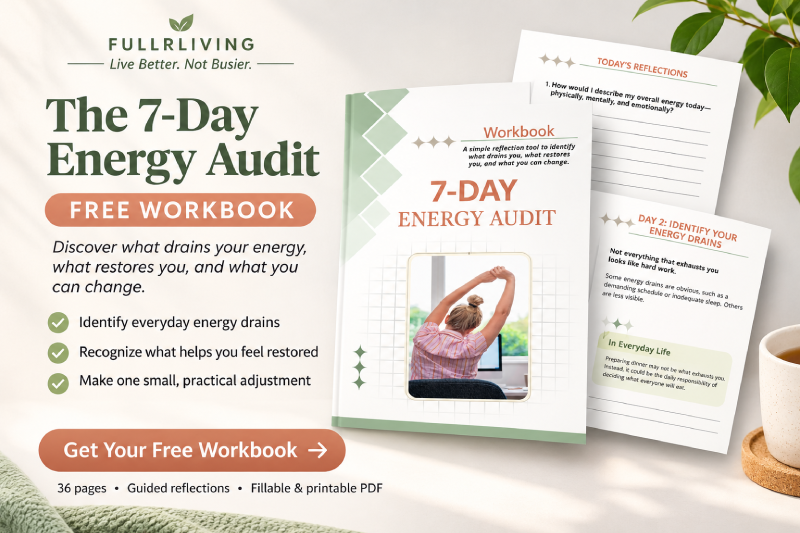 Try This: A Simple Energy Audit
Before adding another habit or changing your schedule, spend a few minutes examining where your energy actually goes. This simple exercise can help you recognize patterns that might otherwise go unnoticed.You can complete it in a notebook, on your phone, or through quiet reflection.
Step 1: Identify What Drains You
Think about the past seven days: Which activities, situations, or responsibilities consistently left you feeling depleted?
Try to be specific.
For example, instead of writing “work,” you might identify constant interruptions, unclear expectations, or responding to messages throughout the day.
Likewise, rather than writing “home,” you might recognize that making every household decision or rarely having uninterrupted personal time leaves you feeling exhausted.
The more clearly you identify a source of stress, the easier it is to consider a practical adjustment.
Step 2: Identify What Restores You
Next, think about the moments when you felt calmer, more focused, or more like yourself.
Perhaps you enjoyed a walk, an uninterrupted morning, a meaningful conversation, or an afternoon when you weren’t rushing. Notice what those moments had in common.
Were you less distracted? Did you have fewer responsibilities? Were you doing something you genuinely enjoyed? These observations may reveal what helps you feel restored.
Step 3: Choose One Adjustment
Now select one energy drain you can reasonably influence.
Could you eliminate it, reduce it, simplify it, share the responsibility, or approach it differently? For instance, if responding to messages throughout the day leaves you distracted, consider checking them at designated times when possible.
Alternatively, if preparing dinner feels overwhelming, planning a few meals in advance may help. The adjustment doesn’t need to be dramatic.
One meaningful change is enough to begin.
Step 4: Check In After Seven Days
After a week, reflect on whether your adjustment made a difference.
- Did it create more space?
- Was there less frustration?
- Did one part of your day become easier?
If the change helped, consider keeping it. Otherwise, try a different approach. Most importantly, remember that this exercise isn’t another performance target. Its purpose is to help you become more aware of what your everyday life is asking of you.
When Fatigue Deserves More Attention
Although stress and mental overload can contribute to exhaustion, persistent fatigue shouldn’t automatically be attributed to a busy lifestyle.
Several medical conditions and health concerns can cause ongoing tiredness, including anemia, thyroid disorders, sleep apnea, depression, and medication effects. Additionally, poor sleep quality may leave you feeling tired even when you’ve spent enough hours in bed.
The National Health Service (NHS) guide to tiredness and fatigue explains potential causes and recommends seeking medical advice when fatigue continues without an obvious explanation or interferes with daily life.
Therefore, if you’re regularly exhausted despite adequate sleep, your symptoms are worsening, or your fatigue affects everyday activities, consider speaking with a healthcare professional.
Seek urgent medical attention if exhaustion occurs alongside symptoms such as chest pain, severe shortness of breath, or fainting.
While lifestyle adjustments may support well-being, they cannot replace appropriate medical evaluation and treatment.
You Don’t Have to Earn Your Rest
Somewhere along the way, many of us began treating rest as something we deserve only after everything else is finished.
- After the emails.
- After the errands.
- After the house is clean.
- After we’ve been productive enough to feel justified in stopping.
Unfortunately, there’s almost always another task waiting. And when rest depends on reaching the end of every responsibility, it can become something we continually postpone.
Protecting your energy isn’t about avoiding effort or responsibility. Rather, it’s about recognizing that your capacity isn’t unlimited. Sometimes you’ll need more sleep. Other times, medical support may be necessary.
There will also be occasions when what you need is require fewer demands, clearer boundaries, or permission to spend an hour doing something that serves no purpose beyond making your day feel a little better. Ultimately, you don’t have to wait until you’re completely exhausted to make room for recovery.
A better question than “How can I do more?” might be “What would make my everyday life less exhausting?”
Start there.